Thursday, October 11, 2018

Servant leadership Explained

“Leadership is behavioral, not positional: the capacity to integrate, innovate and mobilize others to bring a common aspiration to life is what leadership is all about, not holding positions of formal authority.” – Nelson Mandela

The above thought reverberated during a two day leadership workshop titled “Rethinking public service in Nigeria through servant leadership” at the National Agency for the Prohibition of the Trafficking in Persons (NAPTIP). It was an opportunity for NAPTIP officer and 2018 Mandela Washington Fellow, Lawrenta Igoh, to share insights about leadership acquired while on her fellowship and also in compliance with her agency’s capacity development drive. Lawrenta was on the fellowship’s Public Management tract, where she spent six weeks at Bridgewater State University-Massachusetts, with some leadership sessions at Harvard’s Kennedy School of Government and Kennedy Centre for African Studies.

Tuesday, August 14, 2018

Voyage to Hollywood

by Kenneth Gyang

The Embassy of the United States of America to Nigeria recommended me to be a 2018 American Film Showcase (AFS) fellow at the University of Southern California.

Nerds and those in film circles know how much of a big deal USC is. The school famously turned down Steven Spielberg on one hand and produced George Lucas on the other hand- two filmmakers whose films have grossed billions of dollars and set up movements in the film industry. For Nigerians, the director behind the beloved Black Panther graduated from there.

Thursday, March 8, 2018

International Women’s Day: Press For Progress For Nigerian Women


Today is International Women’s Day, a day set aside worldwide to celebrate the social, political, economic and cultural achievements of women.  The United Nations celebrated the day for the first time in 1975 and although women have made great advancements a lot still remains to be done which makes this year’s theme “Press for Progress” apt.  The US Mission in Nigeria is also making its contribution to the advancement of women and girls in Nigeria through several programs that it runs, some specifically targeted at women.

One of such programs is the Techwomen exchange program which the Embassy supports.  The TechWomen is a U.S. initiative empowering and connecting the next generation of women leaders in science, technology, engineering, and mathematics (STEM) from Africa, Asia, and the Middle East.  Some Nigerian women who participated in the 2017 Techwomen exchange program include Carolyn Seaman and Damilola Anwo-Ade.  Carolyn Seaman is using technology to empower girls through her Girls Voices Initiative, while Damilola Anwo-Ade is mentoring the next generation of coders, including young women, through her initiative CodeIT.

The Embassy each year also organizes programs to stop gender based violence during the 16 Days of Activism Against Gender-Based Violence.  Last year, several events were organized including a roundtable discussion on the theme “Eliminating Violence against Women with Disabilities.”  This program was linked virtually through Google Hangout with the five American Corners across Nigeria:  Kano, Bauchi, Calabar, Sokoto, and Maiduguri.  A panel discussion also took place on “United in Justice:  Stopping Gender-Based Violence with Institutional Support.”  Panelists included representatives of the National Police, NGO community, religious institutions, and the National Human Rights Commission.

Women are equally represented in all U.S. Government exchange programs such as the International Visitor Leadership Program (IVLP), Fulbright Program, Hubert Humphrey Fellowship and the Mandela Washington Fellowship.  Of the 100 Mandela Fellows last year 50% were women drawn from different parts of Nigeria.


Editor's note: This entry also appears in the U.S. Mission Nigeria's publication on Medium

Friday, November 17, 2017

What I learned about photography


I attended a photojournalism training recently and it was an eye opener for me.  I love photographs and unlike lots of other people my favorite social media platform is Instagram.  It’s simple and straight to the point.  The pictures say everything.  Although I knew this, it was Maggie Steber, the trainer, who articulated this idea.  Photographs tell stories and capture a piece of history.  I remember pictures of my mum taken in the seventies in which she was wearing a mini dress and afro hairdo and another one in which she wore an “oleku” which incidentally made a resurgence some few years back.  So I do see how photographs relate to history. 

The power of photography is in the fact that it’s a universal language.  A photograph doesn’t need translation.  Whether it’s a wedding photo of a Chinese couple or the picture of a new born baby in the arms of its mother in Ecuador or two street boys fighting in Lagos, it’s instantly understood.  That’s why I love Instagram so much; not many words, just pictures.       

Another thing I discovered during the training is that photography is hard work.  It involves going the extra mile. You may have to walk for miles to find that perfect shot which captures the essence of the story you’re trying to tell.  It also involves taking postures that people might regard as undignified in order to get a particular shot.  One has to be passionate about this work, if you are going to be successful. Fortunately, I saw a lot of this passion in the photojournalists who participated in the training and in the beautiful pictures they shared with the group.    

Good human relations are also important to the success of a photographer.  Maggie explained that if you’re genuinely interested in the people you photograph, you’ll take better pictures.  She exemplified this fact in the time and effort she put into her work in Haiti, getting to know and love the people on that Caribbean island.  This interest led to a project in which she and some of her friends convinced young Haitians to take pictures of their country.  The pictures were featured in National Geographic Magazine under the title “Haiti on its own terms.”  The young photographers wanted to show the world that their country should not be defined entirely by its natural disasters and poverty. There is also a great deal of beauty there.  She encouraged the Nigerian photographers to do the same thing because unfortunately, the image that many people in the West have of Nigeria is largely negative.  Herein lies the power of photography.  It can express beauty in a way that words cannot and begin to change some of the misconceptions about Nigeria and its people.

I also learned that Photoshop is great!  The first time that I saw the impact of Photoshop was when I viewed my wedding pictures.  I did not recognize myself!  Maggie told the journalists to use it to make their pictures richer and I support this wholeheartedly.


At the end of the training, the participants, all professional photojournalists, were excited about the experience and wanted to learn even more.  Even those of us who aren’t professionals left with a new way of looking at pictures and were thankful to the inventors of modern photography.

This entry also appears on the U.S. Mission Nigeria  publication on medium.com

Tuesday, October 31, 2017

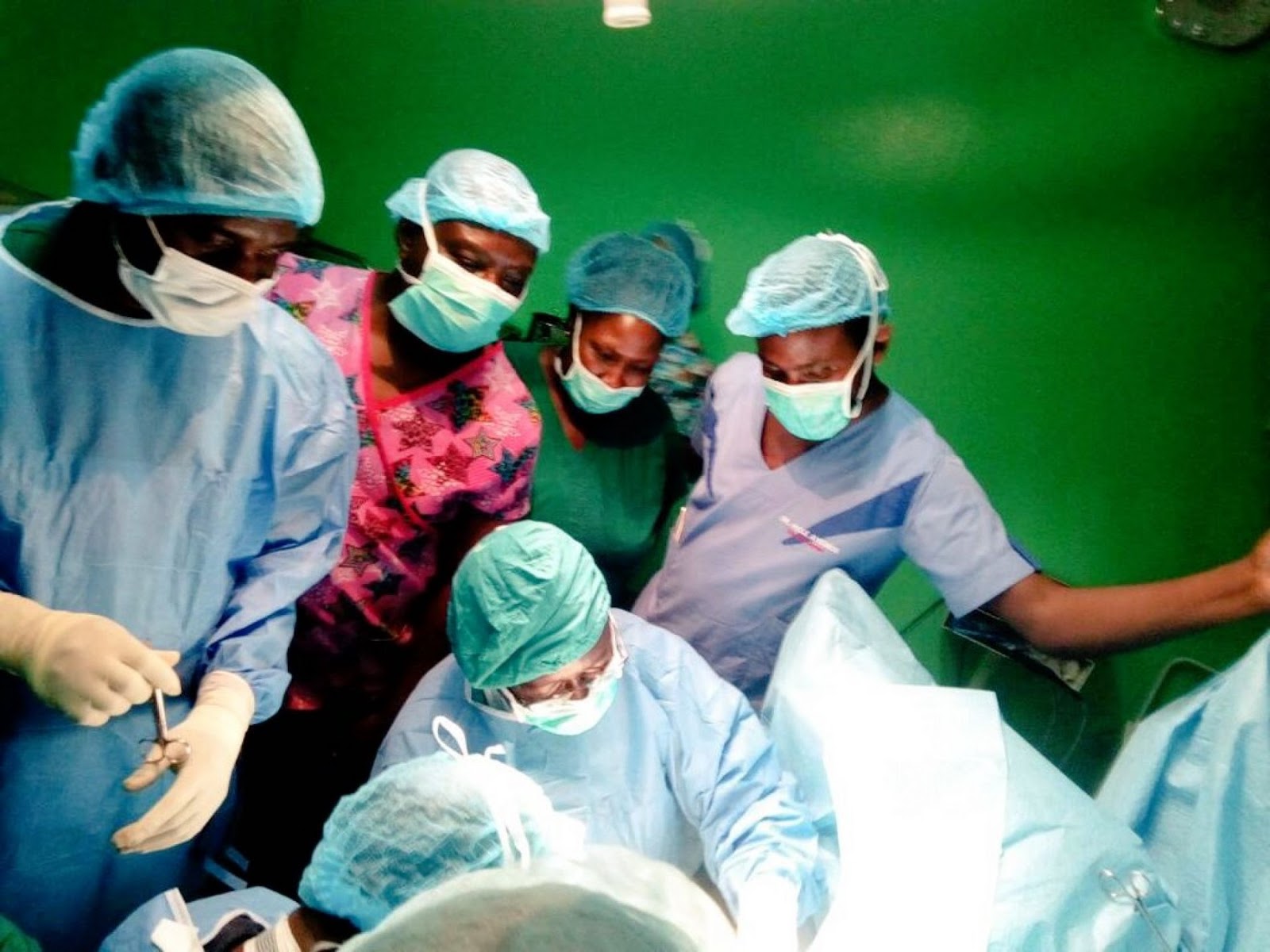
Federal Health Minister Lends a Hand to USAID Fistula Surgical Repair Clinic at Osun State Medical Center

Nigerian Minister of Health Professor Isaac Adewole performs fistula
surgery on a 37-year-old mother of four, alleviating four years
of continual suffering. The Minister assisted with a USAID-supported
free clinic in Osun State to highlight a nationwide initiative to
shrink Nigeria’s large backlog of cases awaiting treatment.
Minister of Health Professor Isaac Adewole took the Health Ministry’s efforts to rid Nigeria of untreated obstetric fistula into his own hands by “scrubbing in” at a free surgical repair clinic for fistula patients at an Osun State hospital in late July.

The Minister led a team of Nigeria’s top obstetric surgeons at the United States Agency for International Development (USAID)-supported event, which marked the commencement of a joint initiative between USAID and Osun State government to expand access to fistula repair treatments within the state. The initiative is part of a nationwide push to improve public access to health care services.

Friday, September 8, 2017

On the Side of an Orphan

A community health worker examines a child
It began with the loss of the father to a road accident and the mother to post- natal complications three months after her birth.  While, Bunmi (not her real name) gained a new mother and caregiver in her Aunt, Mrs. Oloye, there was still more to come for the toddler.   During a door-to-door HIV Testing and Counselling campaign, organized by the USAID-supported Local Partners for Orphans and Vulnerable Children (LOPIN), Bunmi was found to be HIV+.
  
Terrified and sad by the test report, Mrs. Oloye was, at the same time relieved that she had found an explanation for her niece’s worsening health condition.  Prior to the diagnosis Bunmi was sickly and sluggish and the aunt a local herb (Agbo) seller was at her wits end over the child’s steady health decline.

Tuesday, August 8, 2017

Fishing for Market Opportunities in Nigeria

Presenter Joy Michael narrates a how-to video on
fish farming produced by Chi Farms.
Nigerians consume nearly two million metric tons of fish per year, which creates a huge market opportunity for fish farming. A key ingredient in many national dishes, fish is an important source of protein that will see a booming demand as the country’s population grows.
But the fish sector faces challenges, too. More than half of the fish consumed by Nigerians is imported, and the price of imported fish have risen sharply. The government is taking steps to restrict fish imports fish to help encourage domestic production, but a gap in locally produced fish remains.

Friday, July 14, 2017

Abuja Summer Institute Opens to Accelerate Young Women in Digital Media

Johns Hopkins School of Advanced International Studies (SAIS) and University of California, Santa Cruz are among the contributors to the Abuja Summer Institute (ASI) taking place this week in Abuja and next week in Kano which is providing digital social entrepreneurship training primarily targeting northern Nigerian women.

Wednesday, May 17, 2017

The Journalist and Ethics

Freedom of the press is vital to the sustenance of democracy.  No wonder the media is described as the fourth estate following the executive, legislature and the judiciary.  May 3 is celebrated as World Press Freedom Day to highlight the state of the press and focus on violations of this freedom.  The U.S. Embassy Abuja held a series of events to celebrate this important day focused on different themes.  At an event on journalism ethics the Embassy Counselor for Public Affairs Aruna Amirthanayagam said in many places around the world, the media is under tremendous pressure with threats to their safety and wellbeing.  He added that reporting the news accurately has always been challenging requiring great sacrifice on the part of journalists.

Tuesday, April 25, 2017

A Champion for Cancer Care in Nigeria

A champion of cancer research and better patient care, Runcie Chidebe has demonstrated to his native Nigeria the importance of volunteerism and collective action for causes that benefit society.  Through his nonprofit, Project PINK BLUE - Health and Psychological Trust Centre, he’s changing the narrative about cancer in Nigeria and engaging government, nonprofit, and private sector partners to work toward greater support for cancer patients.

Since returning from his 2016 inspiring “Youth and Civic Participation” International Visitor Leadership Program (IVLP) exchange, Runcie has explored leadership strategies that facilitate social empowerment and justice, particularly for underserved communities.  He has engaged more than 300 volunteers in series of cancer awareness programs, founded a cancer patient support hotline, and organized large-scale events in Africa’s largest city, Lagos, and Nigeria’s capital, Abuja.  At a May 2016 Democracy Day event co-hosted by U.S. Embassy Abuja, he presented a paper entitled “Civic participation: stimulating empathy in Nigerian youths,” in which he encouraged youth to become civic leaders and build connections in their community through citizen engagement.  In January 2017, he and Abuja alumni partners organized an impressive program with 300 secondary students to celebrate the life and values of Martin Luther King, Jr.  The program included student speeches, mentoring discussions by U.S. exchange program alumni, participation by U.S. Embassy staff, and a screening of the film Selma.  As an active member of the Abuja Alumni Chapter, Runcie frequently uses his connections with the U.S. Embassy to organize events at U.S. Mission Nigeria’s network of 11 American corners.   He seizes every opportunity to educate, inspire, and empower Nigerian youth.

Wednesday, April 19, 2017

To preserve our home, practice the “three Rs”

Environmental issues have now become a regular topic of discussion.  It’s not unusual to hear people ascribe changes in weather patterns to global warming and so on.  It is generally agreed that more needs to be done to protect the environment and sustain it for the good of man and all other species.  

This year the theme for Earth Day is Environmental and Climate Literacy.  According to the Earth Day network, education is the basis for progress and there’s a need to build a community that understands the concept of climate change and the threat it poses to the earth.  As part of our contribution to the climate literacy campaign, here are some reasons why taking care of the earth and by extension our environment matters.

Monday, March 20, 2017

Fulbright Scholar Donates Sculpture to Promote Reading Culture at the University of Ibadan

An African American sculptor, Prof. Albert Lavergne, a dynamic Fulbright scholar with a special skill in building steel sculptures is presently at the University of Ibadan, Oyo State where he built a large sculpture that promotes reading culture in Nigerian’s homes.  Inspired by the many students and teachers that he met in Ibadan, he built the sculpture in about six months.  Dr. Lavergne explained that through his sculpture he wanted to express that reading provides a foundation for learning and plays a fundamental role in promoting children's critical and imaginative thinking and their intellectual and emotional development. 

Thursday, February 2, 2017

"Faith is taking the first step when you can't see the rest of the staircase..."

By Amaechi Abuah

The Cultural Affairs Officer at the US embassy Larry Socha said a lot of other things to kick off the Martin Luther King Day Competition and the above MLK quote was just one of the many that formed part of his opening remarks, but, for some reason, it's the only one that really stuck.

In that way, it sort of reminds me of "I have a dream." Everyone knows it's this really important speech that changed the course of civil rights activism and all, but, if we're being honest with ourselves, most of us only know that one line. And who would blame us? I mean, it's catchy, "I have a dream." It's like "four score and seven years ago" or "here's looking at you kid." It just has a nice ring to it. And even aside from that, taken by itself, it also has the wonderful property of being just vague enough to mean something a bit different to each person.

Friday, January 27, 2017

Nothing succeeds like success

Amal Hassan wanted to be a doctor so she applied to the university to study medicine.  However the university admitted her to study business administration instead.  Her mother encouraged her to accept and attend the course. The mother was concerned that if Amal delayed, she could lose her opportunity to go. In northern Nigeria, without an education, the normal practice was to marry early.  Choosing to follow her mother’s advice set Amal on the path to become the successful entrepreneur and business woman that she is today. 

Tuesday, January 17, 2017

Bringing disability rights to the forefront

By Ishiyaku Adamu
Participating in the 2016 Mandela Fellowship was a huge opportunity.  It gave me the chance to meet America’s political, business, and academic elite, as well as an inspiring team of volunteers, especially disability rights activists.  Without a doubt, my engagement with this group of Americans during the fellowship had a great impact and will continue to shape my understanding and interpretation of leadership and life in general.

Friday, December 16, 2016

If you must fail, fail forward

How do you start over when a bakery in which you have invested so much—time, money, passion—is  demolished in a twinkle of an eye. How do you start over when on three occasions you have been forced, by a breach in contract and social crises, to start over an operation that you had 70 percent completed? How do you start over when the available power supply is not enough to power the machines at your manufacturing company? These are the stories of three young Nigerian entrepreneurs—Muna  Okam, CEO of Chloe’s Cupcake Heaven, Amal Hassan, CEO of The Outsource Company; and Ibrahim Bashir, an IT professional and marketing and business development manager at Abuja Technology Village Free Zone Company—who are failing forward.

Tuesday, November 29, 2016

The Long Way There……

November 14-18 was international Education Week and Amaechi Abuah member of the U.S. Embassy Education USA Center wrote this article in celebration of the week.

I remember dozing lightly as the bus rolled across lush green hills and past glassy clear lakes. It was Day 4 of the International Physics Olympiads and all around me some of the brightest brains from across the planet were settling into various states of boredom-induced slumber. On a screen in front of the bus, some television scientist had been discovering the Higg’s Boson… again… and again … and again… for the past three hours. We were headed from the city of Zurich to the European Organization for Nuclear Research (CERN) in Geneva to witness the magnificence of the Large Hadron Collider first-hand. It was a five hour drive, and we still had a long way to go.

Friday, November 18, 2016

My Once in a Lifetime Golden Opportunity

by Anthonia Bisola Abayomi-ojo 

On 23rd march, I got the phone call to congratulate me on my selection as a 2016 Mandela Washington fellow. I must have said thank you more than 10 times. I was totally euphoric.
I had chosen the civic leadership track and my fellowship was at Duquesne University, Pittsburgh, Pennsylvania.

The first two weeks of the program focused on US culture, leadership skills development, human rights and writing elevator and ignite speeches. I never knew I could summarise my work in 1 minute. For me, this one of the most vital skills I learned.

Week 3 and 4 were on religion, mindful and ethical leadership and business and entrepreneurship. I learned how to make ethical decisions that might not be popular but reflect my integrity.

Monday, October 31, 2016

A University Without Borders

By Edem Dorothy Ossai

Applications for the Mandela Washington Fellowship of the U.S. government has closed.  As we anticipate results enjoy stories from this year’s cohorts on their experience.

The first thing that struck me about Arizona State University was that there were no boundary walls separating the campus from the rest of the community. Right behind the law building stood the very cosmopolitan Sheraton Hotel, next to the impressive Walter Cronkite school of Journalism stood the grand Arizona Science Centre. Also a few blocks from the University student centre stood the tall glass offices of Goldman Sachs and McKinsey. I had never encountered a University without walls or borders and so I had been in the ASU Downtown Campus in Phoenix, Arizona, for well over 10 minutes without realising. It wasn’t until we got to the front of an attractive student dormitory building called Taylor Place, which would be my home for the next 6 weeks that I suddenly understood. At that point I looked at the cab driver and escort with surprise and asked “when did we go through the university gates?”

Friday, October 21, 2016

EducationUSA: Providing Opportunities

Cross section of participants
during the graduate fair
It is sunrise in Abuja with the skies resplendent in white and blue. Looking at my wristwatch, it is almost nine, and my anxiety concerning the event hit me. As I paid attention to the gate and waited for students to come through the entrance, the admissions officers from different schools in the U.S. arrived, pulling out their trifold and other materials for the fair. Before I could look around, students from all types of schools, with different colors of uniforms arrived and were already signing in. The sight of them took me down memory lane as I recalled my own brown and white high school uniform.